Physical Address
304 North Cardinal St.
Dorchester Center, MA 02124
Physical Address
304 North Cardinal St.
Dorchester Center, MA 02124

Africa’s employment landscape is changing faster than ever before. Advances in technology, the rapid growth of digital businesses, increasing internet connectivity, and a young, ambitious workforce are transforming how organizations recruit talent and how professionals build their careers. Traditional hiring methods that relied heavily on degrees, manual CV screening, and local recruitment are gradually giving way to more intelligent, skills-focused, and technology-driven approaches.
Employers today are not only searching for candidates with the right qualifications but also looking for professionals who can adapt to change, embrace innovation, and contribute to long-term business success. At the same time, job seekers have access to more opportunities than ever before, including remote positions, cross-border employment, and careers in industries that barely existed a decade ago.
Artificial intelligence, data analytics, and digital recruitment platforms are making hiring faster and more efficient, while changing the expectations of both employers and candidates. As businesses continue to expand across African markets, recruitment is becoming increasingly borderless, enabling organizations to access skilled professionals regardless of their location.
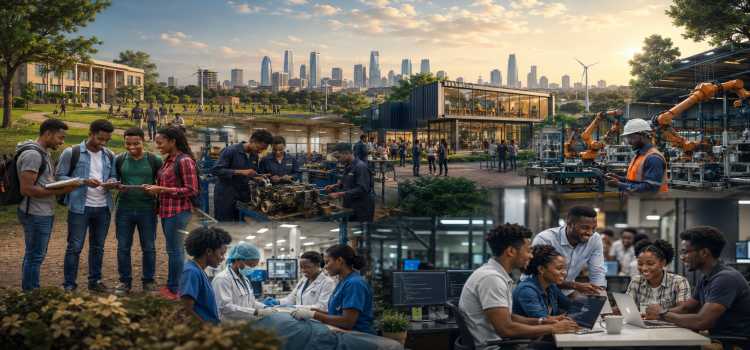
Several economic, technological, and demographic trends are influencing the future of employment across Africa. Together, these changes are creating new career opportunities while encouraging businesses to rethink how they attract, evaluate, and retain talent.
One of Africa’s greatest strengths is its young and rapidly growing population. As millions of young professionals enter the workforce over the coming years, employers will have access to an increasingly diverse talent pool with skills spanning technology, engineering, healthcare, finance, education, and creative industries.
Digital transformation is another major driver of change. Organizations across sectors are investing in cloud computing, artificial intelligence, automation, data analytics, and digital communication tools to improve efficiency and remain competitive. This shift is creating demand for professionals who can work with emerging technologies while adapting to continuously evolving business environments. The African Union’s Digital Transformation Strategy for Africa (2020–2030) recognizes digital transformation as a key driver of economic growth, workforce development, and digital inclusion, highlighting the importance of preparing individuals and businesses for the future of work.
Africa’s growing startup ecosystem is also contributing to the transformation of hiring. Startups and high-growth businesses often prioritize innovation, agility, and practical problem-solving over traditional hiring criteria, opening opportunities for professionals with transferable skills and entrepreneurial mindsets.
In addition, cross-border collaboration is becoming increasingly common. Companies are hiring talent from different African countries, while professionals are working remotely for organizations located across the continent and internationally. This growing workforce mobility is expanding employment opportunities while encouraging organizations to adopt more flexible recruitment strategies.
As these trends continue to evolve, employers are placing greater emphasis on identifying candidates with both technical expertise and the ability to learn, collaborate, and adapt to change.
For many years, academic qualifications served as the primary benchmark for evaluating candidates. While degrees and professional certifications continue to hold value, employers are increasingly recognizing that qualifications alone do not always predict workplace success.
Organizations are shifting toward skills-based hiring, where candidates are assessed according to what they can do rather than simply what they have studied. Technical competencies, communication abilities, leadership potential, adaptability, and practical experience are becoming equally important considerations during recruitment.
This approach benefits both employers and job seekers. Businesses can identify professionals who possess the capabilities needed to solve real-world challenges, while candidates who have developed valuable skills through internships, freelance work, volunteering, certifications, or self-directed learning have greater opportunities to compete for roles.
Continuous learning has also become essential. As technology evolves, professionals are expected to update their knowledge regularly through online courses, industry certifications, workshops, and hands-on experience. Employers increasingly value candidates who demonstrate curiosity, initiative, and a commitment to professional development.
As discussed in Beyond Qualifications: What African Employers Really Want, organizations today evaluate candidates based on a combination of technical expertise, workplace skills, practical experience, and long-term potential rather than academic achievements alone.
This shift reflects a broader understanding that successful employees are those who continue learning, adapt to new technologies, and contribute effectively within dynamic work environments.
Artificial intelligence is rapidly becoming one of the most influential technologies in modern recruitment. Rather than replacing recruiters, AI is helping organizations make faster, more informed hiring decisions by automating repetitive tasks and improving the way candidates are matched with job opportunities.
Traditional recruitment often involves manually reviewing large numbers of CVs, comparing qualifications, and identifying candidates who appear to meet the job requirements. AI-powered recruitment systems simplify this process by analyzing candidate profiles, identifying relevant skills, recognizing transferable experience, and recommending professionals who closely match the needs of a specific role.
For employers, this means shorter hiring cycles, better candidate quality, and more efficient recruitment processes. Recruiters can spend less time on administrative screening and more time conducting interviews, evaluating cultural fit, and building relationships with potential hires.
Job seekers also benefit from AI-powered recruitment. Intelligent job matching platforms can recommend opportunities based on skills, experience, career aspirations, and learning potential rather than relying solely on job titles or keyword searches. This helps professionals discover relevant roles they may not have considered otherwise.
Our guide on How AI-Powered Job Matching Is Transforming Recruitment in Africa explores how artificial intelligence is reshaping recruitment and enabling organizations to connect with qualified professionals more effectively.
As AI technologies continue to evolve, they are expected to become an increasingly important part of recruitment strategies across Africa, helping employers make better hiring decisions while improving the overall candidate experience.
Remote and hybrid work have fundamentally changed the way organizations recruit talent. Advances in cloud computing, collaboration software, and digital communication tools have made it possible for professionals to work effectively from almost anywhere, allowing employers to access talent beyond their immediate geographical location.
Across Africa, businesses are increasingly adopting flexible work arrangements to attract skilled professionals, reduce operational costs, and support employee well-being. Many organizations now offer remote, hybrid, or flexible working models, particularly in industries such as technology, digital marketing, finance, consulting, customer support, and creative services.
This shift has also expanded opportunities for professionals seeking international experience without relocating. Skilled individuals can contribute to projects for companies based in different African countries or global markets while remaining in their local communities. The OECD’s Future of Work initiative highlights how artificial intelligence, new forms of work, globalization, and digital technologies are reshaping employment worldwide, making flexible work models and digital collaboration increasingly important.
Remote work has changed employer expectations as well. Beyond technical expertise, organizations increasingly look for candidates who demonstrate self-motivation, time management, communication, and the ability to collaborate effectively using digital tools. Familiarity with platforms for virtual meetings, project management, and cloud-based collaboration has become an advantage across many industries.
For job seekers, remote work offers greater flexibility and access to a wider range of career opportunities. For employers, it provides access to broader talent pools and enables organizations to build diverse teams with expertise drawn from multiple regions.
As businesses continue embracing flexible work models, remote and hybrid employment are expected to remain important features of Africa’s future workforce.
Recruitment is no longer viewed as a one-sided process where employers evaluate candidates. Today’s professionals also assess potential employers based on how they are treated throughout the hiring journey. As competition for skilled talent increases, organizations are placing greater emphasis on creating a positive candidate experience that reflects their workplace culture and values.
A well-structured recruitment process begins with clear job descriptions that accurately communicate responsibilities, expectations, and opportunities for growth. Candidates also value transparent communication, timely updates, and constructive feedback throughout each stage of the hiring process. Even applicants who are not selected are more likely to maintain a positive perception of an organization when they experience professionalism and respect.
Technology has also contributed to improving candidate experience. Online applications, automated interview scheduling, AI-powered communication tools, and digital onboarding platforms have simplified many aspects of recruitment, making the process faster and more convenient for both employers and job seekers.
Employer branding has become another important factor influencing hiring success. Professionals increasingly research organizations before applying for roles, considering factors such as workplace culture, employee development opportunities, diversity initiatives, and long-term career prospects. Businesses that communicate their values effectively are often better positioned to attract and retain high-quality talent.
Creating a positive recruitment experience benefits everyone involved. Employers strengthen their reputation while improving hiring outcomes, and candidates gain greater confidence in the organizations they choose to join.
As industries evolve, employers are seeking professionals who combine technical expertise with the workplace skills needed to succeed in collaborative and fast-changing environments. While digital transformation has increased demand for specialized technical knowledge, human skills remain equally important for long-term career success.
Technical skills continue to be highly valued across industries, particularly in areas such as:
These capabilities support organizations as they adopt new technologies, improve operational efficiency, and deliver innovative products and services.
At the same time, employers consistently emphasize the importance of human skills that cannot easily be automated. Communication, critical thinking, adaptability, collaboration, creativity, and emotional intelligence enable professionals to work effectively with colleagues, solve complex challenges, and lead teams through change.
Leadership has also become increasingly valuable, regardless of job title. Organizations appreciate employees who take initiative, support colleagues, contribute ideas, and demonstrate accountability in their daily work.
Professionals who invest in both technical expertise and personal development are likely to remain competitive as the workplace continues to evolve.

The future of hiring will rely increasingly on data to support recruitment decisions. Rather than making choices based primarily on intuition or limited information, organizations are using recruitment analytics to better understand hiring performance, workforce trends, and candidate behavior.
Modern recruitment platforms provide valuable insights throughout the hiring process. Employers can monitor application volumes, identify which recruitment channels attract the highest-quality candidates, measure time-to-hire, analyze interview success rates, and evaluate long-term employee retention. These insights help organizations continuously improve their recruitment strategies while reducing hiring costs.
Artificial intelligence also contributes to data-driven recruitment by identifying patterns that may not be immediately visible through manual evaluation. Skills-based matching, workforce forecasting, and predictive analytics allow organizations to anticipate future hiring needs and build stronger talent pipelines.
For job seekers, data-driven recruitment creates opportunities to better understand employer expectations. Professionals can identify which skills are most frequently requested, monitor emerging industry trends, and make informed decisions about certifications or training that will strengthen their career prospects.
As recruitment technologies become more sophisticated, data will continue supporting better decision-making while allowing recruiters to focus their attention on meaningful conversations and relationship building.

The future of recruitment will reward organizations and professionals who embrace continuous learning, innovation, and adaptability. Preparing for this evolving landscape requires commitment from both employers and job seekers.
Organizations can strengthen their recruitment strategies by investing in technology that improves efficiency while maintaining a human-centered hiring approach. AI-powered recruitment platforms, skills-based assessments, and workforce analytics can help businesses identify qualified candidates more effectively without compromising fairness or transparency.
Employers should also focus on developing strong employer brands, creating inclusive workplaces, and providing opportunities for employee growth. Professionals increasingly seek organizations that invest in learning, well-being, and career development, making these factors important components of long-term talent attraction and retention.
Professionals should view career development as an ongoing process rather than a one-time achievement. Continuous learning, industry certifications, practical experience, and networking can significantly improve employability as workforce requirements continue to evolve.
Building a professional online presence, developing transferable skills, and staying informed about emerging technologies will also help candidates remain competitive across different industries.
Individuals exploring opportunities through platforms featuring Jobs in Ghana, Jobs in Nigeria, and specialized career categories can improve their prospects by regularly updating their skills and remaining open to new career paths that align with changing market demands.
Ultimately, success in the future workforce will depend less on following a fixed career path and more on the ability to learn, adapt, and contribute value throughout a professional journey.
Africa’s recruitment landscape is entering an exciting new phase. Advances in artificial intelligence, digital transformation, remote work, and skills-based hiring are creating opportunities for employers to build stronger teams while enabling professionals to access careers that were previously beyond their reach.
Although technology will continue reshaping recruitment, successful hiring will remain centered on people. Employers will continue seeking individuals who demonstrate curiosity, adaptability, collaboration, and a willingness to learn, while professionals who continuously develop their capabilities will be better prepared for future opportunities.
The organizations that embrace innovation without losing sight of human connection will be best positioned to attract exceptional talent. Likewise, job seekers who invest in lifelong learning and remain adaptable will find themselves better equipped to navigate an increasingly competitive and dynamic employment market.
The future of hiring in Africa is not simply about filling vacancies more efficiently. It is about creating meaningful connections between people, skills, and opportunities that contribute to sustainable economic growth across the continent.
The future of hiring in Africa is being shaped by technology, changing workforce expectations, and skills-based recruitment.
Key takeaways include: